
I. The Phrase Patients Hear — and Often Misinterpret
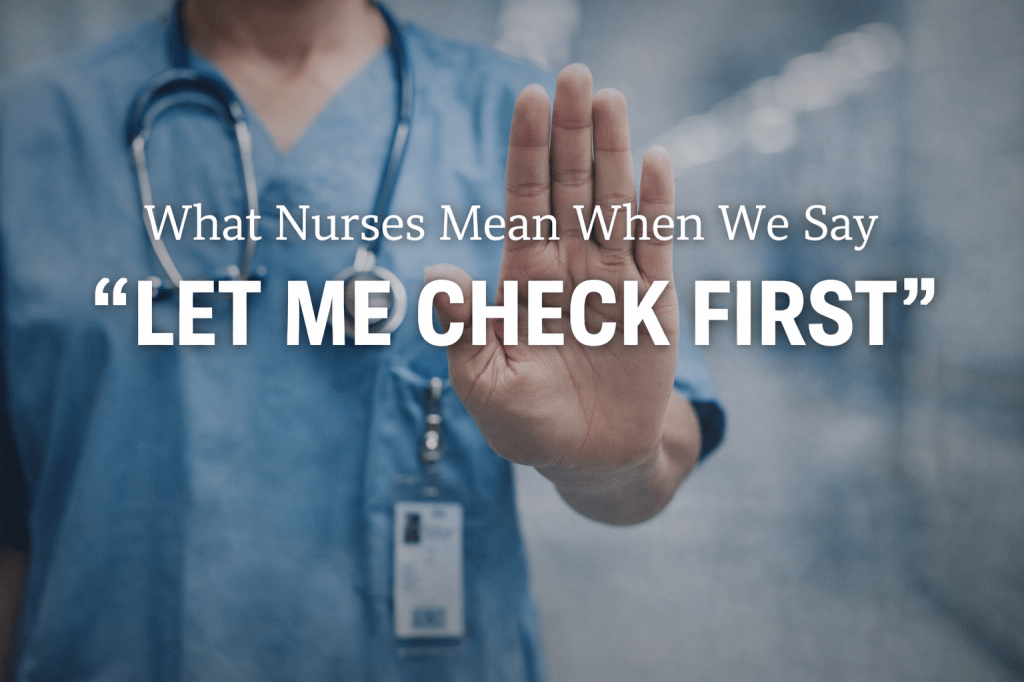
There is often a sense of frustration when a patient hears a nurse say “Let me check first”. In moments of vulnerability, that phrase can create a narrative that what a patient is saying about their own body or needs is being questioned or dismissed. It can feel like an unnecessary delay — a pause between what the patient feels they need and the action they are waiting for, whether that’s medication, movement, or permission to do something.
Over time, that pause can quietly erode trust. Some patients interpret it as uncertainty or lack of competence, assuming that if a nurse has to “check,” they must not already know the answer. In those moments, the phrase can sound less like caution and more like doubt.
I once cared for a patient who wanted to take their Eliqius, a blood thinner that they had been prescribed prior to admission. The patient had undergone surgery just a few hours earlier. When I explained that I needed to check with the provider before giving the medication, the patient became upset and said:
“ If you don’t know the answer to my simple question then I want another nurse who does.”
Although the reaction was sharp, it was clear that it came from a place of worry rather than anger. The patient was concerned about disrupting their normal routine and feared that missing a dose would lead to other complications. To them, my hesitation sounded like uncertainty — or worse, indifference.
After further conversations, it became clear that the patient believed my response signaled a lack of concern for their situation. From their perspective, it was understandable. When you are already anxious, uncomfortable, or recovering from surgery, being told to wait can feel like being ignored — even when that isn’t the intention.
II. What “Checking” Actually Means
When a nurse says they need to “check” on something, it is rarely just one detail they are reviewing. Nursing practice is rooted in patient safety, and that means verifying even the smallest pieces of information before taking action.
When we are “checking,” we are doing more than confirming something with a provider. We are reviewing medical notes that document your progress throughout your hospital stay — notes written by other nurses, physical therapists, nursing assistances and members of the surgical team involved in your care. We are also reviewing operative reports to understand how a procedures went and whether there were any complications that could affect what is safe to do next.
During this process, we are asking questions such as:
Did the procedure take longer than expected?
Was there more blood loss than anticipated?
Were there any unexpected issues during surgery?
Did the provider leave specific instructions that must be followed?
We also consider your current vitals, as well as laboratory results, which play a critical role in determining what actions can be taken safely. What may seem like a simple request can depend on multiple factors that are not always visible to the patient.
Skipping these steps — or assuming instead of confirming —can result in serious harm. That is why “checking” is not a delay; it is a safeguard.
In healthcare patterns matter, but individual details matter more. While many patients follow similar recovery paths, no two surgeries — and no two bodies— are exactly the same. “Let me check first” is how nurses make sure that what usually works is still what is safest for you.
III. When Acting Too Quickly Becomes Risky
When a nurse says “let me check first,” it’s because acting too quickly—before all the information is reviewed—can create real and avoidable risk.
In a hospital setting, decisions are rarely based on one factor alone. A patient may feel ready, a task may seem routine, or something may have been done safely before. But what’s safe now depends on details that aren’t always visible in the moment.
Recent medications, surgical notes, vital signs, lab results, and provider instructions all influence what can be done safely—and when. Acting before those pieces are confirmed can lead to complications that no one intended.
This is where misunderstandings often happen. From a patient’s perspective, waiting can feel unnecessary or frustrating. From a nursing perspective, waiting is often the difference between a safe action and one that causes harm.
Skipping the “check” can result in falls, medication errors, disrupted surgical repairs, or delayed recovery. These outcomes aren’t always dramatic at first—but their consequences can be lasting.
“Let me check first” isn’t hesitation.
It’s prevention.
It’s the pause that protects the patient from risks they may not even know exist yet.
Most of the time, the risks of acting too quickly remain invisible — until they aren’t.
I’ve witnessed how a single missed detail, one unchecked note, can change the course of a patient’s recovery.
This is one of those moments.
IV. The Story
There was an excited patient on my unit who had just undergone knee replacement surgery after waiting a long time for the procedure. They told the nurse they felt ready and wanted to get up and walk.
The nurse, encouraged by the patient’s enthusiasm, agreed to assist. She placed a gait belt on the patient, provided a walker, and reviewed instructions on how to stand safely. This was all standard practice. The patient followed the instructions, with the nurse standing close by.
When the patient stood and took their first step on the surgical leg, a popping sound was heard. The patient immediately fell back into the bed and began screaming in pain.
The patient had to return to surgery the following day to repair the damage that occurred.
The nurse involved was experienced with orthopedic patients and knew that early mobility is often encouraged after surgery. However, this patient had experienced complications during the procedure. The surgeon had placed special instructions in the operative note regarding when and how the patient should begin walking.
Those instructions were not reviewed beforehand.
Because they were missed, the patient was allowed to move too soon — and ultimately suffered because of it.
V. The Pause That Protects You
When a nurse says “let me check first,” it isn’t hesitation or uncertainty — it’s responsibility.
It means we are pausing long enough to make sure the next step doesn’t undo the progress you’ve already made. It means we are protecting your recovery, not delaying it.
Independence is always the goal. But in the hospital, independence returns safely when timing, healing, and readiness align — not when urgency or frustration rush the process.
Checking first isn’t about control.
It’s about making sure you get home whole.
 Clarity and Case
Leave a comment