
Author: Chardonnay | Clarity and Case
-
Why Your Blood Pressure Is High at the Hospital (But Normal at Home)
Your blood pressure was normal at home — so why is it suddenly high at the hospital? Here’s what nurses are actually looking for, what affects readings, and when a high number truly matters.
-
The Silence Before We Call a Rapid Response
Sometimes emergencies don’t start with chaos. They start with quiet. The moment a nurse stops talking isn’t hesitation — it’s calculation. Here’s what that silence really means.
-
Why We Wake You Up at Night (Even When You’re Finally Sleeping)
Finally falling asleep in the hospital— only to be woken up again— can feel frustrating and unnecessary. This post explains why nurses perform nighttime checks, how they help catch silent changes early, and why safety often takes priority over uninterrupted sleep.
-
Why Nurses Check Your Wristband Every Time
Being asked to show your wristband over and over can feel repetitive or unnecessary. This post explains why nurses check wristbands every time — and how that simple step plays a critical role in keeping patients safe.
-
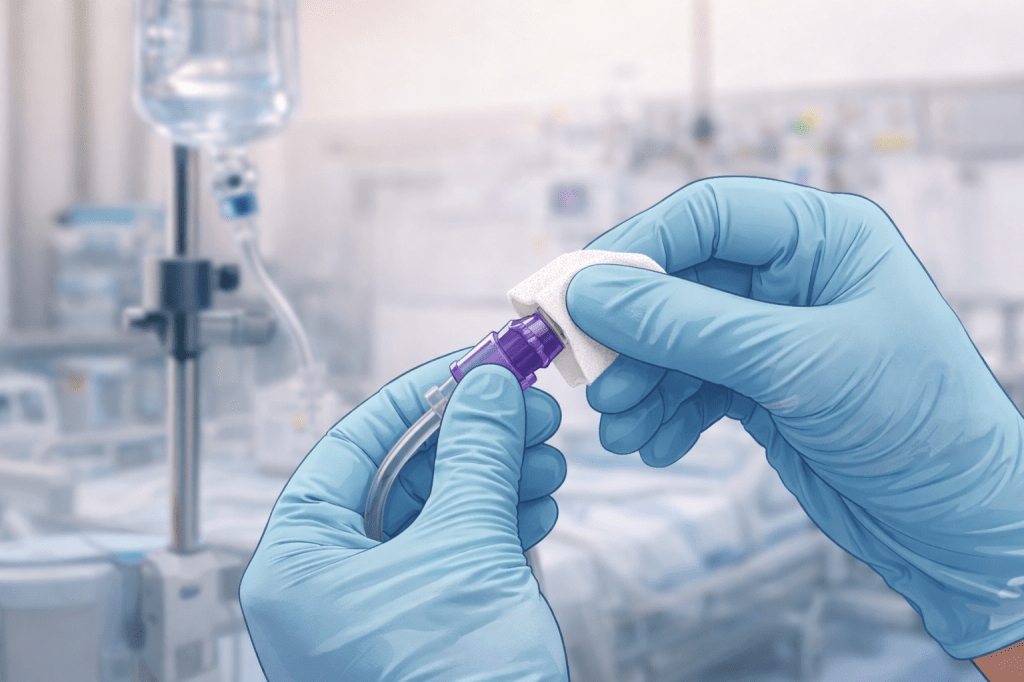
Why Nurses Clean the IV Hub Every Single Time
Scrubbing an IV hub may seem repetitive or unnecessary, especially when it was just used. This post explains why nurses clean IV hubs every single time— and how those small steps play a critical role in preventing serious infections.
-
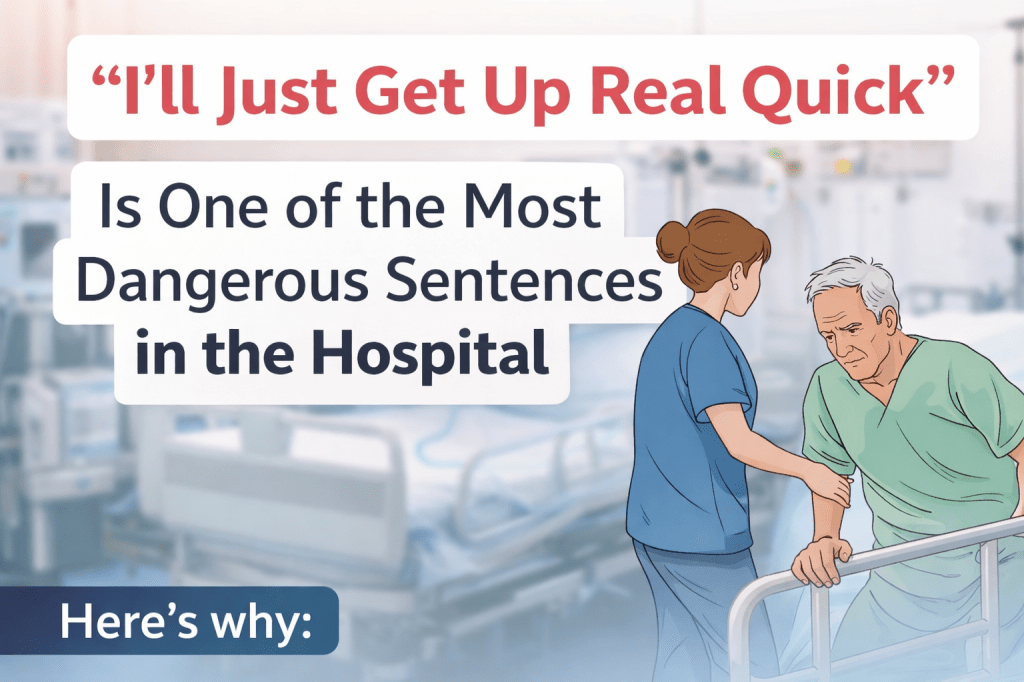
The Most Dangerous Sentence Nurses Hear: “I’ll Just Get Up Real Quick”
“I’ll just get up real quick” sounds harmless- something most of us say everyday. But in the hospital, that sentence can carry risks patients don’t always see. This post explains why nurses pause when they hear it, and how waiting just a moment can prevent life-changing injuries.
-

Why Nurses Ask the Same Questions Over and Over
Patients often wonder why they’re asked the same questions repeatedly in the hospital. It’s not forgetfulness— it’s vigilance. In this post, we break down how repetition is essential to patient safety and how it helps catch subtle changes before they become big problems.
-

The Pulse You Felt, Not the Number You Saw
We rely on numbers, charts, and assumptions more than we realize. But a documented vital sign is not the same as an assessment performed. The most basic checks are often the ones we skip—and the ones that matter most. This is a reminder that presence is still a clinical skill.
-
What Nurses Mean When We Say “Let Me Check First”
When a nurse says “Let me check first,” it isn’t hesitation —it’s protection. This post ex plains what that phrase really means, why it matters, and how checking first can prevent harm before it happens.
 Clarity and Case