
Tag: Clarity and case
-
Why Your Blood Pressure Is High at the Hospital (But Normal at Home)
Your blood pressure was normal at home — so why is it suddenly high at the hospital? Here’s what nurses are actually looking for, what affects readings, and when a high number truly matters.
-
Why Nurses Check Your Wristband Every Time
Being asked to show your wristband over and over can feel repetitive or unnecessary. This post explains why nurses check wristbands every time — and how that simple step plays a critical role in keeping patients safe.
-
What Nurses Mean When We Say “Let Me Check First”
When a nurse says “Let me check first,” it isn’t hesitation —it’s protection. This post ex plains what that phrase really means, why it matters, and how checking first can prevent harm before it happens.
-
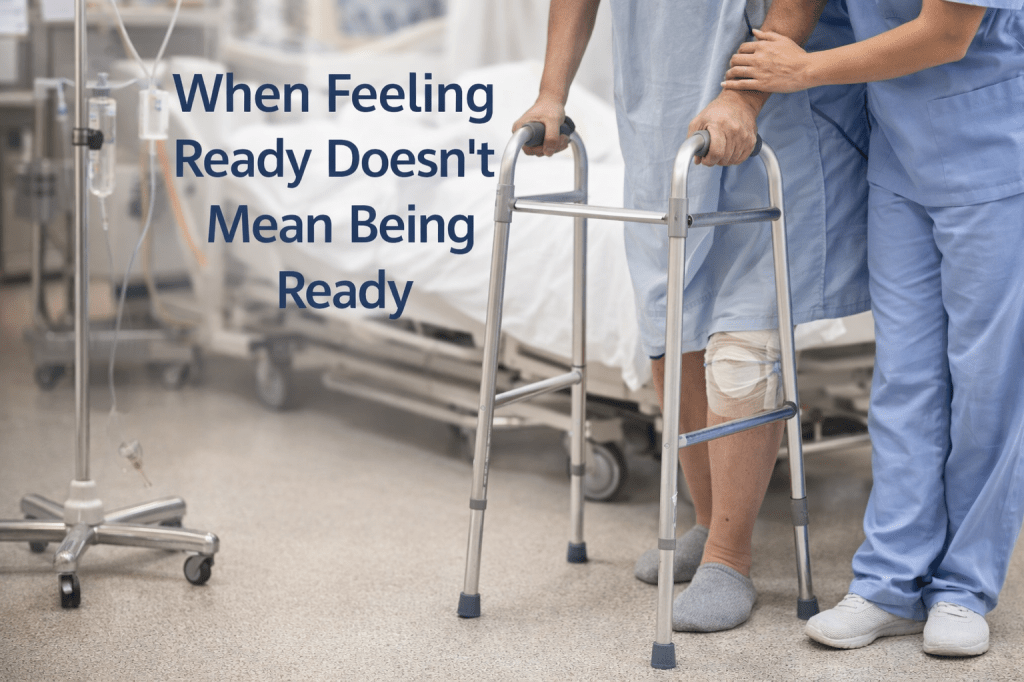
When Feeling Ready Doesn’t Mean Being Ready
After surgery, feeling capable and being physically ready aren’t always the same. This post explores why nurses sometimes say “no,” how safety decisions are made, and why. Independence returns best when the body is— not just motivation— is ready.
-
After the Weight Comes the Why: What Nurses Mean When We Say “Document Everything”
Beyond the paperwork lies purpose. A reflection on how nursing documentation preserves truth, trust, and the story of care itself.
-

Why Do Nurses Flush IV Lines?
Patients often wonder why nurses flush IV lines before giving medication. The truth is, that clear syringe of saline does more than prepare the line – it protects the patient, prevents complications, and even carries medical-legal significance.
-
Why Does it Feel Like Something’s in My Eye?
During surgery, even a small detail like eye protection can make all the difference. This post explains how corneal abrasions happen, why they’re preventable, and how attentive nursing care – and proper documentation – protect both patients and providers.
 Clarity and Case